
Powerplays can change the way teams approach batting and bowling in limited-overs cricket. sportstatsflow.com provides cricket scorecard content for readers who want to understand match rules and player statistics. During these periods, fielding restrictions create different scoring opportunities for the batting side. Batters may try to use open spaces, while bowlers look for early wickets and tighter control. The exact rules depend on the format and competition being played. Understanding powerplays makes scorecards easier to interpret because the same run total can mean different things depending on when those runs were scored. It also explains why teams sometimes begin aggressively before settling into a more measured approach.
What Powerplays Mean In Cricket
A powerplay is a period when restrictions limit how many fielders can stand outside the inner fielding circle. These restrictions are designed to create scoring opportunities and influence tactical decisions. The number of overs covered by each powerplay depends on the format and applicable playing conditions. One Day Internationals and Twenty20 cricket use different arrangements, so their rules should not be treated as identical. Powerplays are not simply instructions for batters to attack every delivery. Teams must still consider wickets lost, pitch behavior, bowling quality, and the match situation. A careful approach can sometimes produce a stronger foundation than constant aggressive hitting. The rules create opportunities, but players decide how best to use them.
Powerplays In One Day Matches
In standard One Day Internationals, the innings is divided into phases with different fielding restrictions. The opening powerplay covers the first ten overs, when only a limited number of fielders can be outside the circle. Later overs have different restrictions under the applicable playing conditions. This arrangement encourages teams to consider how scoring and wicket preservation should be balanced. Batters may target gaps created by the fielding limits, while bowlers often focus on line, length, and movement. An early wicket can change the plan because new batters may need time to settle. Readers should check the competition rules when following domestic tournaments, since particular events can use modified playing conditions.
Powerplays In Twenty20 Cricket
Twenty20 cricket uses a shorter powerplay at the start of each innings. In standard international T20 matches, the first six overs have fielding restrictions that allow fewer fielders outside the inner circle. Since the innings lasts only twenty overs, teams often place greater emphasis on scoring opportunities during this period. Batters may attack deliveries that offer good hitting options, but careless shots can lead to early dismissals. Losing several wickets quickly can leave the middle order with a difficult recovery task. Bowlers try to make the most of this phase through accurate deliveries and smart changes of pace. The short format creates pressure because every over represents a larger share of the innings.
How Fielding Restrictions Affect Scoring
Fielding restrictions influence where captains can position their players during a powerplay. With fewer fielders outside the circle, some areas of the ground may offer more space for scoring shots. Batters can look for gaps, use controlled placement, or target boundaries when the delivery allows. However, the fielding team can still defend effectively through disciplined bowling and sharp movement inside the circle. A batter who attacks every ball may give away wickets without gaining enough runs. The best approach depends on the pitch, the bowler, and the current match situation. Fielding restrictions create certain opportunities, but they do not guarantee a high scoring rate for the batting team.
Bowling Plans During Powerplays
Bowlers often adjust their plans during powerplays because the fielding restrictions affect available defensive options. Accurate line and length can limit easy scoring even when more ground space remains open. Fast bowlers may use swing or seam movement to challenge batters early in the innings. Spinners can also be effective when conditions support control and variation. Captains might use their strongest bowlers during this phase to seek early wickets. However, an aggressive field setting can leave gaps if the bowler misses the intended line. Good bowling requires a clear plan and the ability to adapt after each delivery. A successful powerplay is not judged only by wickets, but also by the runs conceded.
Reading Powerplay Runs On Scorecards
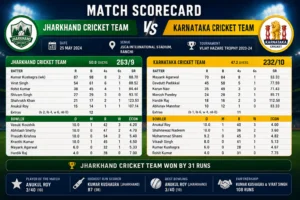
A scorecard may show the runs scored during the powerplay separately from the innings total. This helps readers understand whether a team started quickly or struggled to find scoring opportunities. For example, a team scoring 55 runs in six T20 overs has a different opening pace from one scoring 35 runs. The number of wickets lost must also be considered. A quick start with three wickets down can create more problems than a slightly slower start with all wickets available. Powerplay figures become more useful when compared with the team’s overall scoring rate and the conditions at the time. They show how the innings began, but they cannot predict how the remaining overs will unfold.
Common Powerplay Strategy Mistakes
One mistake is assuming that batters must attack every delivery during the powerplay. Some balls deserve respect, especially when the pitch offers movement or the bowler is controlling the game. Another mistake involves ignoring the importance of wickets while chasing a target. A team may score quickly early but struggle later after losing several established batters. Bowling teams can also make errors by trying too many variations without maintaining basic accuracy. Captains need to balance attacking fields with realistic defensive options. The strongest strategy changes according to conditions rather than following one fixed approach. Reading the scorecard alongside the match situation helps explain whether a powerplay plan worked as intended.
Comparing Powerplay Performances Fairly
Powerplay totals should be compared with care because conditions and opposition quality differ between matches. A score that looks modest on a difficult pitch might be competitive, while a higher total could be ordinary on a flat surface. Weather, ground dimensions, bowling attacks, and wickets lost all affect the meaning of the figures. Comparing the same format usually provides a clearer starting point than mixing T20 and ODI statistics. Readers should also check the number of overs included in the reported powerplay total. Tournament rules and shortened matches can change the usual arrangements. These details help prevent misleading conclusions when comparing teams or reviewing player performances.
Conclusion
Powerplays create important tactical choices for both batting and bowling teams. Fielding restrictions can open scoring areas, but teams still need accurate decisions and sensible execution. Powerplay totals become more meaningful when readers consider wickets lost, pitch conditions, and the remaining innings. Different cricket formats use different arrangements, so checking the applicable rules is important. Understanding these details makes cricket scorecards easier to read and match strategies easier to follow. For more cricket scorecard information, match statistics, and related cricket topics, sportstatsflow.com offers additional reading for interested fans.
Read also :-