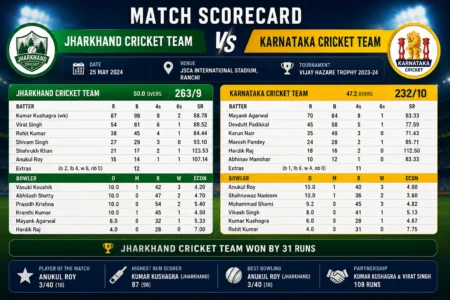
A cricket scorecard is one of the easiest ways to review what happened during an innings. On sportstatsflow.com, readers interested in cricket scorecards can explore the figures that explain batting contributions and bowling performances. The numbers might appear simple when viewed separately, but together they provide a useful record of the match. Runs show what the batting side achieved, wickets reveal how often the bowling side made breakthroughs, and overs indicate how much of the innings has been completed. Individual statistics add another layer because they show how each player influenced the contest. Understanding these figures does not require advanced cricket knowledge. A little familiarity with the common columns makes most scorecards easier to follow.
Start With Batting Details
The batting section normally appears near the beginning of an innings scorecard. It lists the players who came to the crease and records their individual contributions. Common columns include runs, balls faced, fours, sixes, and strike rate. Some scorecards also display dismissal details, showing how a batter lost their wicket. These entries help readers understand whether the team depended on one player or received useful contributions from several members. A batter scoring 70 runs may appear to have delivered the strongest performance, but the number of balls faced provides important context. Scoring 70 from 45 balls is different from scoring 70 from 110 balls. Both can be valuable in the right conditions, so the match format and innings situation should always be considered.
Runs Are Only The Beginning
Runs are the most visible part of batting statistics, but they do not explain everything about an innings. A player might score quickly, build a patient innings, or contribute a short but useful total during a difficult chase. The scorecard records the final number of runs credited to each batter. It also shows how those runs were collected through boundaries and running between the wickets. A high number of fours and sixes can indicate aggressive scoring, although it does not always describe the complete innings. Some batters collect many singles and doubles while keeping the scoreboard moving. Others rely more heavily on boundaries. Readers should consider the total runs, balls faced, and boundary count together before forming an opinion about the performance.
Balls Faced And Scoring
Balls faced show how many deliveries a batter received while at the crease. This number helps explain the time and opportunity behind an individual score. A player scoring 25 runs from 12 balls has made a different contribution from someone scoring 25 runs from 35 balls. The first player has scored more quickly, which can be important when a team needs late runs. The second player may have helped stabilise an innings after early wickets. Balls faced are particularly useful when comparing players from the same match because the conditions are usually similar. However, not every delivery presents the same scoring opportunity. A batter facing a difficult spell from a quality bowler may need to focus on survival before looking for boundaries. Statistics become more useful when they are read alongside the match situation.
Fours And Sixes Matter
Boundaries are recorded separately because they provide information about how a batter scored. A four is awarded when the ball reaches the boundary after touching the ground, while a six is normally awarded when the ball crosses the boundary without touching the ground. The exact circumstances follow the playing rules. Scorecards often include separate columns for fours and sixes, making it easier to identify a batter’s boundary contribution. A player hitting eight fours and two sixes has collected a substantial portion of their runs through boundaries. Another player may score a similar total through quick running and fewer boundary shots. Both approaches can be effective depending on the field placement, pitch, and bowling attack. Boundary numbers are useful, but they should not become the only measure of batting quality.
Strike Rate Shows Speed
Strike rate is a common statistic in limited-overs cricket. It measures the number of runs scored per hundred balls faced and helps readers compare scoring speed. The calculation divides a batter’s runs by balls faced before multiplying the result by one hundred. A batter scoring 60 runs from 40 balls has a strike rate of 150. A second batter scoring 60 from 60 balls has a strike rate of 100. The first player scored at a faster pace, which may be valuable in a T20 match. In Test cricket, the importance of strike rate can be different because innings length and match conditions are not the same. Readers should compare players within a similar format whenever possible. A statistic becomes misleading when the context behind it is ignored.
Batting Average Has Meaning
Batting average is another useful figure that appears in player statistics and some scorecard summaries. It is generally calculated by dividing the total runs scored by the number of times a batter has been dismissed. Not out innings are not counted as dismissals in the calculation. This means a batter’s average can differ from a simple division of runs by innings played. A player who scores consistently and remains unbeaten several times may have a higher average than expected. A single match scorecard may not provide enough information to judge a player’s long-term average. Readers usually need a series or career statistics section for that comparison. Batting average can help measure consistency, but it should be considered alongside strike rate and the player’s role within the team.
Dismissal Details Explain More
A scorecard commonly records how each batter was dismissed. Terms such as caught, bowled, lbw, run out, stumped, and caught and bowled describe different ways a wicket can fall. These entries help readers understand the bowling team’s success and the circumstances behind each dismissal. A caught dismissal may indicate that a batter attempted an attacking shot or mistimed a delivery. A bowled dismissal means the ball hit the stumps and removed at least one bail. An lbw decision involves the ball striking the batter’s body under conditions defined by cricket rules. Run outs can occur when batters fail to complete a run safely. The dismissal column is useful because it adds information that the wicket count alone cannot provide.
Bowling Columns At A Glance
The bowling section records the work completed by each bowler during the innings. Most scorecards include overs, maidens, runs conceded, and wickets taken. The economy rate may appear in another column or be calculated from the available figures. Overs show how many sets of legal deliveries the bowler completed. Maidens indicate overs in which no runs were charged to the bowler, subject to the scoring rules. Runs conceded show how much scoring was charged against that bowler. Wickets taken provide information about dismissals credited to the bowling player. These numbers create a basic summary, but they do not describe every delivery. A bowler may create pressure through dot balls even when the figures show no wicket.
Economy Rate And Control
Economy rate measures the average number of runs conceded per over. It is commonly used to compare how effectively bowlers restrict scoring, especially in limited-overs cricket. A bowler who concedes 30 runs from five overs has an economy rate of six. Another bowler allowing 45 runs from five overs has an economy rate of nine. The lower figure suggests stronger control in that particular comparison. Still, economy rate depends on the match conditions and the role assigned to the bowler. A bowler attacking for wickets during the final overs may concede more runs than someone bowling during a quieter stage. Readers should check when the overs were delivered and how many wickets were taken. Economy is useful, but it does not tell the entire bowling story.
Wickets And Bowling Impact
Wickets are an important part of bowling statistics because they show how often a bowler contributed to dismissals. However, not every dismissal is credited to the bowler. Run outs are generally recorded separately, and some other dismissals have specific scoring rules. A bowler’s wicket tally should therefore be read with the dismissal details. Taking two early wickets can be more influential than taking two wickets after the match situation has already become one-sided. The timing of wickets can change the batting team’s plans and place pressure on incoming players. Readers should also look at runs conceded and the number of overs completed. A bowler taking several wickets while maintaining control may have delivered an especially useful performance.
Maidens And Dot Balls
A maiden over is an over in which no runs are charged to the bowler. It can help create pressure because the batting team has used six legal deliveries without adding runs against that bowler. However, the official scorekeeping rules determine how certain extras are treated. Dot balls are individual deliveries from which no runs are scored by the batting side. A bowler can deliver several dot balls without completing a maiden over. These details matter because pressure often develops through repeated deliveries that restrict scoring options. In shorter formats, a few quiet overs can increase the required run rate and force batters into risky shots. Readers should not ignore economical spells simply because the bowler did not take many wickets.
Extras Change The Figures
Extras are added to the team total but are not credited to a batter’s personal score. The common categories include wides, no-balls, byes, and leg-byes. Each category follows its own scoring rules, and some extras may also affect the number of deliveries in an over. Wides and no-balls can increase the batting team’s total and may require additional deliveries. Byes and leg-byes are recorded when runs are completed under the relevant circumstances. A scorecard normally shows the combined extras figure and sometimes provides a breakdown by category. This information explains why the team total may not equal the sum of individual batter scores. In close matches, extras can become especially important because a small number of additional runs may influence the result.
Compare Bowling Spells Fairly
Comparing two bowlers requires more than checking their wicket totals. Their overs, runs conceded, economy rates, and match roles all provide useful context. One bowler may have delivered during the powerplay, while another worked during the final overs against attacking batters. Those assignments create different challenges. A bowler who concedes 35 runs in four overs may have performed well if the pitch was easy for batting. Another bowler conceding the same total might have struggled if conditions strongly favoured bowlers. Readers should also consider the quality of the opposition and whether the bowler took important wickets. Fair comparisons use the available figures without ignoring the conditions in which those performances happened.
Scorecards Across Competitions
Different competitions can present statistics in slightly different ways. International matches, domestic tournaments, franchise leagues, and local competitions may use different layouts or additional information. The basic batting and bowling columns remain familiar, but some platforms include advanced metrics. These may cover partnership details, wagon wheels, over summaries, and other performance information. Readers should check the labels rather than assume every website uses identical abbreviations. A scorecard may also display substitutes, retired hurt players, or other unusual entries when relevant. These details do not necessarily indicate an error. They reflect situations that can happen during an actual match. Understanding the basic columns first makes the additional information easier to interpret.
Conclusion
Batting and bowling statistics make a cricket scorecard much more informative than a simple final result. Runs, balls faced, boundaries, and strike rates explain how batters contributed, while overs, economy rates, maidens, and wickets describe bowling performances. Dismissal details and extras provide further context that can change the way readers understand an innings. No single statistic should decide whether a player performed well because match conditions and individual responsibilities matter. Learn the common scorecard columns and compare figures from similar formats for a clearer view. Visit sportstatsflow.com for cricket scorecard information and match statistics that help you follow individual performances and team results.
Read also :-