
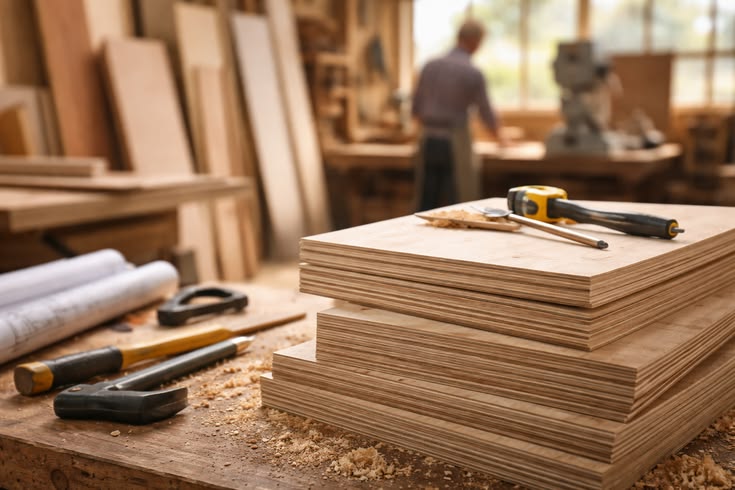
There has been a shift away from traditional heavy-weight building materials in favour of light-weight engineered building materials. This trend is occurring rapidly within the design field, and plywood has become very popular among designers over the past few years. Using high-quality plywood in the construction process gives designers two main benefits: they will have the benefit of constructing with a product that has very good structural properties, and they will be inspired to create unique structures and designs. This is why many designers prefer plywood for home interiors to create durable and visually appealing spaces. Below are examples of why plywood has become the favourite design medium of modern interior designers.
Amazing Versatility
Plywood is more stable than solid timber, so it doesn’t warp and is generally easier and quicker to process than solid timber due to its size and shape. Designers can shape and design three-dimensional forms via CNC equipment from a two-dimensional substrate material. Because they are able to create complex geometric patterns or curves in plywood, designers can design custom-made acoustic wall panels and multi-functional modular furniture that will enhance the flow of space in an area. Plywood is the bridge between artistic conception and actual construction.
Structural Integrity with Minimal Designs
Minimalism has become a very popular design theme in contemporary design; therefore, designers are now under pressure to produce structurally integrative designs that are predominantly structural elements but create the perception of space using as few structural elements as possible with clean, thin lines. Designers trust using plywood in their designs as it is formed with a cross-laminated construct, providing a strong weight-to-ratio and stability for a long time.
Commitment to Sustainable Interiors
Designers consider contemporary design as an all-in-one project, and that both the environment and the end-user will benefit from the decision of the designer. In considering E-0 compliant plywood that produces no formaldehyde emission by using advanced adhesive technology, designers will have the component needed to provide high indoor air quality for their clients’ spaces. Choosing durable plywood for bed designs also helps create strong and long-lasting furniture solutions for modern interiors. As a result, plywood is recommended for use in beds, children’s nurseries, and home offices.
Understanding the Lifetime of Their Work
A designer’s work will reflect judgment based on what it looks like when installed and over time. If the product fails, i.e., moisture damage or bugs, it reflects upon the designer. To assist with ensuring their client’s project will stand the test of time, the designer should specify using only high-quality plywood rated for boiling water-proof (BWP) and treated with advanced termite-resistance treatment. By using high-quality products such as Royale Touche products, designers can ensure the durability of their designs.
Conclusion
For designers, plywood has transitioned from being a hidden sub-layer for finish materials to a driving force for innovation and can create a foundation for modern living,g incorporating structural integrity, flexibility, and durability throughout the life of the product. Therefore, the designer’s use of high-quality plywood materials supports their commitment to long-lasting/high-quality product creation and ultimately creates a lasting legacy for the clients.