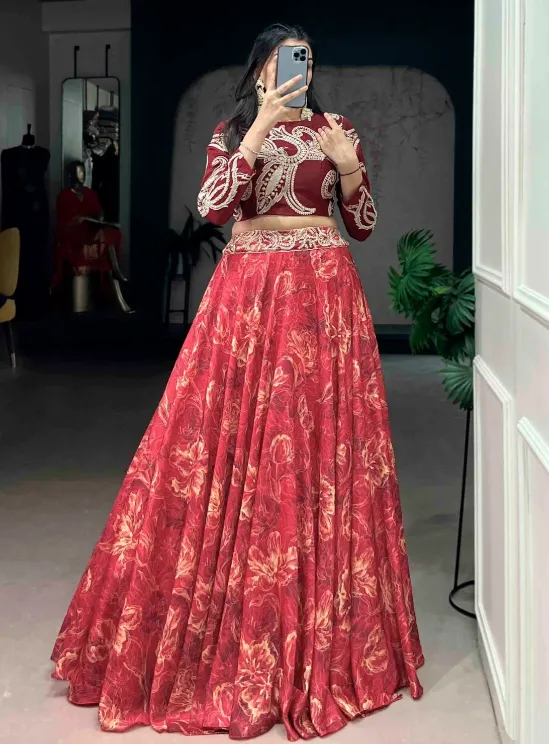
Pack the skirt first. A full hem needs the widest part of a suitcase, and it’s much harder to make room for it after the shoes are in. A crop top lehenga looks compact on a hanger because the blouse is short, yet its skirt can take up most of one side of a case. Before adding anything else, lay the pieces out in the order you’ll wear them. That’s when you’ll spot the matching jacket still hanging behind the bedroom door.
Give the Skirt Enough Space
Lay the skirt loosely inside the empty case and feel beneath it for ridges left by the wheel housings or handle rails. A folded cotton garment can even out that surface before a decorated border goes on top. Close the lid gently for a trial run. If someone has to sit on it while you pull the zip, move a pair of shoes or a change of clothes to another bag. Leave enough room for the lid to close without flattening the folds.
Work With the Skirt’s Structure
Construction matters more than a fabric name when deciding how much space to allow. One red design in the Silk Lehenga Choli collection has a skirt with a cancan layer that holds out its flare, along with a sequinned net dupatta. The stiff layer takes up room even when the outer fabric is light. Gather the skirt into broad folds, slipping soft, unbuffered acid-free tissue inside each bend. Arrange thickly embroidered panels side by side so one raised motif doesn’t press into the next.

Protect the Blouse’s Shape
A blouse can disappear into the corner of a suitcase and still emerge with a sharp dent across the front. If it has shaped cups, support the hollow behind each cup with loosely crumpled tissue. Keep hard objects away from that area when you close the lid. Fasten hooks that might catch and lay ties in loose loops. If yours is a flat, unpadded top, spread it over the skirt with a layer of clean cotton between any decorated surfaces.
Wrap Each Outer Layer Separately
A hot pink floral set with a matching lace-edged jacket has three pieces to account for before you leave. Lay the jacket open, bring the sleeves gently across the body and keep its trim clear of exposed hooks. A set with a net dupatta needs a slightly different arrangement. Lift the dupatta by sliding a hand underneath it, then lay it in its own smooth cotton wrap. Keep the wrap beside the blouse so you can find both when you arrive.
Keep the First Outfit Accessible
Pack for the first function last if you’re going straight from the journey to a welcome dinner. Put the pieces you’ll reach for first near the opening, with shoes enclosed in their own bags and liquids in a separate zipped pouch. A small cloth bag can hold the outfit’s loose pieces, especially when two people are sharing a case. Make a list that reflects the set you actually own. These smaller items are easy to leave on the dressing table at home.
-
A detachable belt in its fabric pouch.
-
Loose blouse ties or a separate sash.
-
The slip that belongs under the skirt.
-
Spare covered buttons supplied with the outfit.
-
Hair accessories wrapped separately from the embroidery.
Unpack Before the Welcome Dinner
At the venue, clear a clean surface before opening the case. Lift each piece out and open the folds with your hands, checking any embroidery that was tucked inside. A light jacket can go on a padded hanger. Lay a heavily embellished skirt flat on the bed while you get ready. If a crease is still obvious, read the garment’s care label before applying heat or handing it over for pressing. Point out the decorated area to whoever will be pressing it.
Conclusion
Save the clean wraps when you dress for the wedding. The journey home is usually when someone slips the dupatta into the nearest bag or leaves a jacket on the back of a chair. Give each piece a little time to air and make sure it is dry before folding it away. Then count the pieces back into the same case. Three spaces on the bed for a skirt, top and jacket will tell you straight away if something is still downstairs.