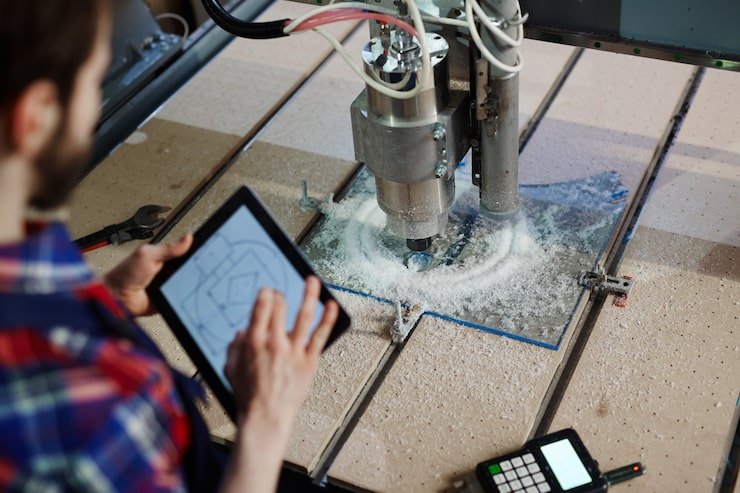
Unexpected challenges often appear once raw material meets a cutting tool, and that is where skill makes the difference. A team familiar with a wide range of metals, polymers, and engineered composites can prevent problems before they ruin a part. Working with machining services near me that understand the behavior of each material helps ensure that final components arrive consistent, stable, and ready for use.
Choosing the Right Tooling Prevents Warping in Heat-sensitive Polymers
Heat-sensitive plastics respond quickly to tool friction. Selecting cutters with the right geometry, flute design, and coating keeps temperatures low enough to avoid distortion during the cut. CNC companies near me with extensive polymer knowledge often choose specialized end mills designed to reduce friction and minimize chip welding. Tooling choices also affect surface finish. Polymers that soften too easily become uneven or wavy if the tool generates excess heat. A CNC machine company with polymer expertise knows how to pair materials with suitable tools, helping each part maintain its intended shape without unexpected bending or softening.
Fine-tuned Spindle Speeds Stop Work-hardening in Tough Stainless Alloys
Stainless alloys, particularly high-nickel grades, can work-harden if spindle speeds are not set precisely. A cutter that moves too slowly or lingers too long in one spot will cause the metal to harden ahead of the toolpath, creating chatter, tool wear, and premature edge dulling. Fine-tuned spindle settings prevent this cascade of problems.
The deeper benefit is consistency. A CNC machine shop near me that understands stainless behavior sets cutting parameters to keep the alloy in its most workable state. This approach reduces scrap rates, improves surface quality, and ensures that the final part meets dimensional expectations without struggling through hardened sections.
Proper Coolant Selection Prevents Chemical Staining on Raw Aluminum Faces
Raw aluminum surfaces are vulnerable to staining or patchy discoloration if incompatible coolants are used. Certain coolant blends interact with the aluminum oxide layer, creating marks that affect cosmetic requirements or sealing surfaces. Experienced machining companies near me understand which coolant chemistries keep aluminum clean and bright throughout the process.
Coolant flow rates and delivery methods matter just as much. High-quality cooling prevents heat build-up that can discolor alloy faces or alter finishing consistency. Shops offering CNC services near me that routinely work with aluminum know how to balance lubrication, cooling, and flushing to preserve the metal’s natural appearance.
Deep Insight into Grain Structure Ensures Parts Stay Stable After Cutting
Internal grain structure determines how a material behaves once stress is released through machining. Some metals, especially forged or cast components, may twist, bow, or shift dimensions after material is removed. Understanding grain orientation allows CNC companies near me to predict these movements and plan cuts accordingly.
Adjusting machining order, tool direction, and material removal rates helps maintain stability. This keeps parts from drifting out of tolerance during or after the process. CNC machining near me that incorporates grain knowledge into planning often produces more reliable components with fewer unexpected deformations.
Expert Feed Rates Stop Chipping When Machining Brittle Aerospace Ceramics
Aerospace ceramics offer strength and temperature resistance but are unforgiving under aggressive feed rates. Too much pressure at the cutting edge causes micro-fractures or visible chipping, compromising the part before finishing even begins. Trained teams calculate feed rates that let the tool glide through ceramic material rather than forcing it.
Ceramics require careful, incremental removal. Excessive material removal in one pass increases the risk of cracks that may travel deeper into the part. Skilled CNC services near me familiar with these materials use progressive feed strategies that retain the ceramic’s integrity while maintaining reliable production speeds.
Matching Cutters to Specific Metal Grades Yields a Mirror-like Finish
Different metal grades respond uniquely to tool coatings, cutter materials, and cutting angles. A cutter that produces a clean finish on mild steel may create lines or haze on harder alloys. Selecting cutters that match metal grade ensures that mirror-like finishes are achievable without excessive polishing.
Polished surfaces matter for functional reasons too. Lower friction, improved sealing, and better fatigue resistance often depend on smooth finishes. Machining companies near me that understand grade-specific behavior optimize tooling choices to produce flawless surface quality directly from the machine.
Managing Thermal Expansion Keeps Tight Bores Accurate in Copper or Brass
Copper and brass expand quickly under heat, which can distort small bores or delicate features during cutting. Proper thermal control minimizes this growth by maintaining steady temperatures throughout the machining cycle. Teams skilled in these materials monitor heat buildup carefully to keep dimensions stable.
Accuracy is especially important for tight-tolerance components. Even slight expansion can shift fits or misalign mating parts. A CNC machine shop near me with strong material expertise compensates for this by adjusting speeds, feeds, and tool engagement to manage heat throughout the operation.
Sourcing Certified Mill Runs Guarantees No Hidden Flaws in the Raw Stock
Material flaws often appear only after machining begins. Certified mill runs provide traceability that helps ensure metals and polymers meet required specifications before cutting. A CNC machine company with proper sourcing practices reduces the risk of internal voids, inconsistent composition, or poor structural integrity.
Verified stock also improves repeatability. Consistent raw material allows machining services near me to maintain predictable tool life, cleaner finishes, and fewer dimensional surprises. Quality inputs build the foundation for reliable outcomes.
Adjusting Tool Paths for Exotic Metals Extends Tool Life and Part Quality
Exotic metals such as titanium, Inconel, and hardened tool steels require thoughtful tool paths. Sharp corners, abrupt direction changes, or unnecessary passes can stress both the cutter and the material. Adjusting tool paths helps distribute heat, reduce tool pressure, and preserve part quality.
Refined tool path strategies also improve longevity of cutting tools. Lower tool wear reduces production cost and ensures tighter dimensional control. For manufacturers seeking dependable machining support, Amtec Solutions Group provides CNC machining expertise that applies advanced material understanding to achieve consistent, high-quality results across complex projects.