
Shops investing in powder coating often discover that equipment choices shape far more than finish quality. Layout flow, energy use, labor efficiency, and future scalability all hinge on how systems are selected and paired. Knowing how powder coating equipment differs at a functional level helps decision-makers build setups that support real production goals instead of fighting them.
Manual Guns vs Automatic Powder Guns in Coating Control
Manual powder guns give operators direct control over spray angle, distance, and coverage. This flexibility is valuable for complex parts, custom colors, and short runs where adjustment happens part by part. Operators can react instantly to Faraday cage areas, edge buildup, or part geometry changes without stopping the line.
Automatic powder guns shift control from the operator to programmed settings and motion paths. These systems shine in repeatable, high-volume work where consistency matters more than hands-on adjustment. Automatic guns reduce variability between shifts and operators, which helps stabilize film thickness across large batches of identical parts.
Conveyor Systems vs Batch Booths for Workflow Speed
Conveyor-based powder coating systems support continuous movement from pretreatment through coating and cure. Parts flow steadily, reducing idle time and allowing predictable throughput. This approach fits facilities aiming for high output and minimal handling between stages.
Batch booths offer flexibility when part sizes, colors, or schedules vary. Operators can load, coat, and cure based on demand rather than line speed. Many shops choose batch systems when purchasing a powder coating equipment package designed for mixed workloads or lower daily volume.
Small Booth Setups vs Large Industrial Curing Ovens
Smaller booth and oven setups are often used for light-duty work or limited floor space. These systems consume less energy and cost less upfront, making them common among shops entering the market. They handle short runs efficiently but can become bottlenecks as demand grows.
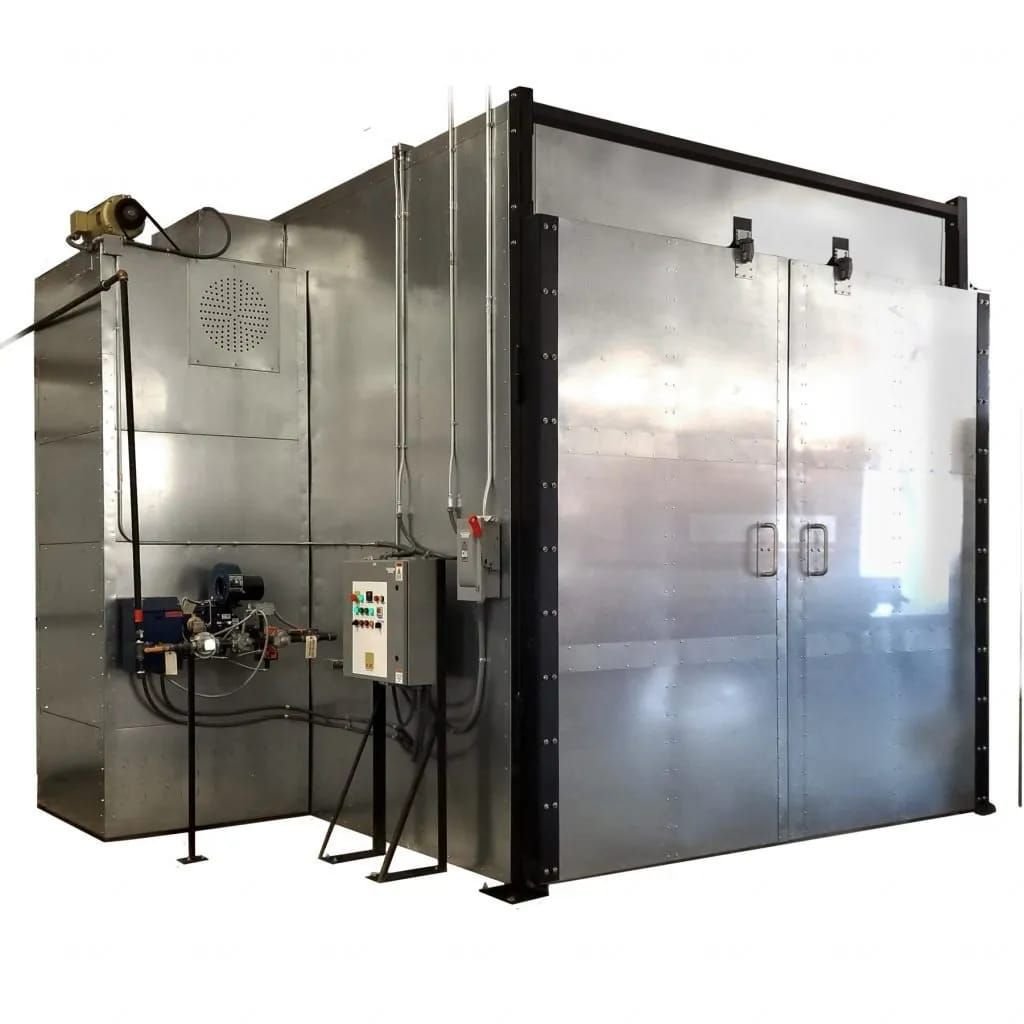
Large industrial powder coating oven installations support heavy parts, long cure cycles, and high throughput. These ovens maintain uniform heat across larger chambers, which reduces cure variation. Facilities planning for growth often prioritize industrial-scale ovens when evaluating powder coating equipment for sale.
Standard Guns vs Tribo Guns in Charge Efficiency
Standard electrostatic guns use high-voltage charging to attract powder to grounded parts. This method works well for most coatings and materials, offering strong transfer efficiency and broad powder compatibility. Operators can adjust voltage settings to match part geometry and powder type.
Tribo guns rely on friction charging rather than voltage. Powder gains charge as it passes through the gun barrel, which reduces back-ionization and helps coat recessed areas. While tribo systems require specific powders, they can improve coverage in challenging geometries where standard guns struggle.
Dedicated Booths vs Portable Booths for Space Flexibility
Dedicated powder booths are fixed installations designed for continuous use. They support higher airflow rates, integrated recovery systems, and better containment. These booths work best in facilities with consistent coating schedules and dedicated floor space.
Portable booths offer flexibility for shops with changing layouts or limited room. They can be repositioned or removed as needs shift, making them useful for temporary lines or expansion phases. Portable options are often included in modular powder coating equipment packages aimed at adaptable operations.
Portable Ovens vs Fixed Ovens in Curing Consistency
Portable powder coating ovens allow shops to move curing capacity where it is needed. These ovens work well for oversized parts or temporary production zones. Mobility adds convenience but can introduce temperature variation if placement or airflow changes. Fixed ovens deliver consistent curing through controlled insulation, airflow, and burner placement. These systems maintain stable temperatures cycle after cycle, which protects finish quality. Buyers searching for a powder coating oven for sale often weigh portability against long-term cure reliability.
Air Makeup Units vs Basic Ventilation for Booth Health
Basic ventilation systems exhaust overspray and maintain airflow, but they rely heavily on incoming ambient air. Temperature swings, humidity, and dust can affect booth conditions and operator comfort. Over time, these variables influence coating consistency.
Air makeup units condition incoming air before it enters the booth. Temperature and humidity control stabilize the coating environment and improve powder flow. Many advanced powder coating systems include air makeup units to protect finish quality and improve working conditions.
Floor-mounted vs Overhead Systems in Layout Choice
Floor-mounted systems place booths, ovens, and handling equipment at ground level. This setup simplifies installation and maintenance while reducing overhead structural requirements. It suits facilities with lower ceilings or heavier parts.
Overhead systems suspend parts from conveyors, freeing floor space and improving flow. They support continuous lines and automated handling but require stronger building infrastructure. Layout choice often depends on building constraints and long-term production plans tied to powder coating equipment investment.
Single Phase vs Three Phase Power in Equipment Options
Single phase power supports smaller equipment with lower electrical demand. Many entry-level powder coating ovens and booths operate on single phase, making them easier to install in light industrial spaces. Power availability can limit oven size and recovery system capacity.
Three phase power supports higher loads and more efficient motor operation. Industrial powder coating oven systems typically rely on three phase power to maintain stable heat and airflow. Facilities planning for expansion often consider electrical upgrades part of their equipment strategy.
Reliant Finishing Systems provides engineered powder coating solutions designed to match real production demands. Their team works closely with manufacturers to configure equipment, layouts, and system components that support efficiency, consistency, and future growth. From system planning to long-term scalability, they help operations build coating setups that perform reliably day after day.




buy stromectol uk
buy stromectol uk
vardenafil price
vardenafil price
lansoprazole brand
lansoprazole brand
lasix for dogs over the counter
lasix for dogs over the counter
Comments are closed.